

Introduction
Business finance simply means the money a business needs to start, operate, and grow. In simple terms, it is all about how a business gets funds, manages them wisely, and uses them to achieve its goals. Every business, whether small or large, depends on finance to keep things running smoothly such as paying employees, buying materials, and expanding operations.
Finance plays a very important role at every stage of a business. When starting a business, money is needed to set up the foundation like equipment, office space, and initial operations. During daily operations, finance helps in managing expenses such as salaries, utilities, and inventory. When a business grows, additional funding is required to expand into new markets, launch new products, or increase production capacity.
There are different sources of business finance that companies rely on to meet these needs. These are mainly divided into internal sources, which come from within the business, and external sources, which come from outside investors, banks, or financial institutions. Understanding both types helps business owners choose the right funding option based on their needs and situation.
What Are Sources of Business Finance
Sources of business finance refer to the different ways a business can obtain money to start, operate, and expand its activities. In simple words, they are the methods through which a company gets the funds it needs to keep running and grow over time.
Every business requires finance at different stages, and these funds can come from within the business or from outside. For example, a business may use its own profits or savings, or it may borrow money from banks or attract investors. This is why understanding the sources of business finance is important for every entrepreneur and business owner.
These sources help businesses manage daily expenses, invest in new opportunities, and handle unexpected financial challenges. Choosing the right source depends on factors like the size of the business, its financial condition, and how quickly the funds are needed.
Importance of Business Finance
Finance is the backbone of any business because without proper funding, no business can survive or grow. It is needed not only to start a business but also to keep it running smoothly on a daily basis. From paying employees to purchasing raw materials, every activity depends on available funds.
One of the main reasons finance is important is that it helps in starting a business by covering initial setup costs such as equipment, infrastructure, and licensing. Without sufficient capital, even a strong business idea cannot be turned into reality.
Finance is also essential for running day to day operations. Businesses need money to manage salaries, utility bills, inventory, and other regular expenses. Proper financial management ensures that the business does not face cash flow problems.
In addition, finance plays a key role in business expansion. When a company wants to grow, enter new markets, or launch new products, it requires additional funding. This is where different sources of business finance become very important, as they provide the necessary support to help businesses achieve long term success.
Main Sources of Business Finance Overview
Businesses can raise money from different channels depending on their needs, size, and stage of growth. These sources of business finance are generally grouped into a few broad categories that help us understand how funding works in practice.
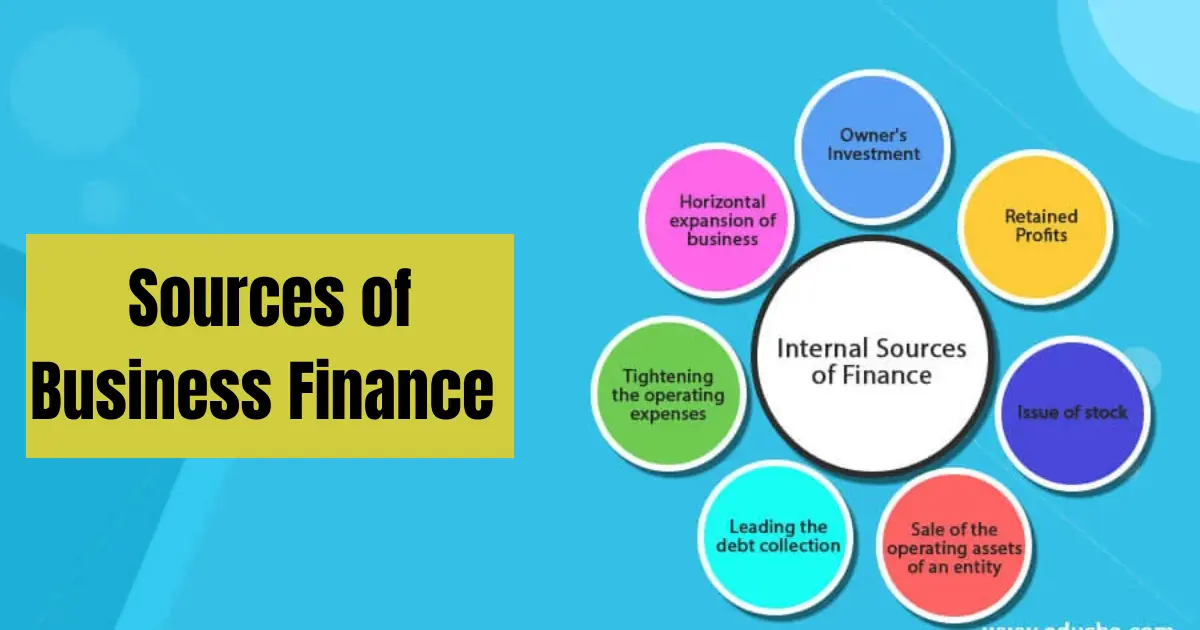
The first major classification is internal sources, which refers to funds generated from within the business itself. This includes profits that are reinvested back into the business, personal investment from owners, and selling unused assets. Internal sources are often preferred because they do not create debt or reduce ownership control.
The second category is external sources, which involve funds coming from outside the business. These can include bank loans, investors, venture capital, crowdfunding, trade credit, and government support. External financing is usually used when businesses need larger amounts of capital for growth or expansion.
Another way to view financing is based on time duration, such as short term financing and long term financing. Short term finance is used for daily operational needs, while long term finance is used for expansion and major investments.
Understanding these categories helps businesses choose the most suitable option depending on their financial situation and future goals.
Internal Sources of Business Finance
Internal sources of business finance refer to the funds that are generated within the business itself without depending on outside lenders or investors. These sources are often considered safer because they do not create debt or require sharing ownership. Many small and medium businesses prefer internal funding as a first option before looking for external support.
Retained Earnings
Retained earnings are the profits that a business keeps and reinvests instead of distributing them to owners or shareholders. This is one of the most common internal funding methods. It helps businesses grow steadily without taking loans, although it depends on how much profit the business makes.
Owner Capital
Owner capital is the money invested by the business owner from personal savings or assets. This is usually the starting point for most startups. While it gives full control to the owner, it also involves personal financial risk.
Sale of Assets
Businesses sometimes raise funds by selling unused or outdated assets such as machinery, equipment, or property. This method can quickly generate cash, but it may reduce long term operational capacity if not managed carefully.
These internal options are an important part of the overall sources of business finance because they provide flexibility and reduce dependency on external borrowing.
External Sources of Business Finance
External sources of business finance refer to the funds that come from outside the business. These sources are widely used when internal funds are not enough to meet business needs, especially for expansion, large investments, or starting new ventures. Unlike internal sources, external financing often involves repayment obligations or sharing ownership.
Bank Loans
Bank loans are one of the most common external funding options. Businesses borrow money from banks and repay it over time with interest. These loans usually require collateral and a strong repayment plan, but they provide a reliable source of funding for both small and large businesses.
Venture Capital
Venture capital is funding provided by investors to high growth potential businesses, usually startups. In return, investors take equity in the company. Along with money, venture capitalists often provide guidance and support to help the business grow faster.
Angel Investors
Angel investors are individuals who invest their personal money in early stage businesses. They often support new entrepreneurs with both funding and mentorship. This source is very helpful for startups that have strong ideas but limited financial resources.
Crowdfunding
Crowdfunding involves raising small amounts of money from a large number of people, usually through online platforms. It is popular for creative projects and new product ideas where public interest plays a key role in funding success.
Trade Credit
Trade credit is when suppliers allow a business to purchase goods or services and pay for them later. This helps businesses manage short term cash flow without immediate payment pressure.
Government Grants and Subsidies
Some governments provide financial support to small businesses and startups in the form of grants or subsidies. These funds often do not need to be repaid, but they come with specific eligibility criteria and conditions.
These external funding options play a major role in the overall sources of business finance, especially when businesses aim for rapid growth or large scale operations.
Short Term Sources of Business Finance
Short term sources of business finance are the funding options that help a business meet its day to day operational needs. These funds are usually required for a short period, generally less than one year, and are mainly used to manage working capital such as paying salaries, purchasing inventory, and covering routine expenses.
Bank Overdraft
A bank overdraft allows a business to withdraw more money than is available in its account up to a certain limit. It is a flexible option because interest is charged only on the amount used, not the entire limit.
Trade Credit
Trade credit is a common short term financing method where suppliers allow businesses to buy goods now and pay later. This helps in maintaining cash flow and keeping operations smooth without immediate cash payment.
Short Term Loans
These are loans taken from banks or financial institutions for a short duration. They are usually used to cover temporary financial gaps or urgent business needs.
Working Capital Loans
Working capital loans are specifically designed to manage daily business operations. They ensure that a business has enough cash flow to handle operational expenses without interruption.
Long Term Sources of Business Finance
Long term sources of business finance are used when a business needs funds for a longer period, usually more than one year. These funds are mainly required for major investments such as business expansion, purchasing fixed assets, entering new markets, or launching new products.
Equity Shares
Equity shares represent ownership in a company. When a business issues shares to investors, it raises capital without creating a repayment obligation. However, it does result in sharing ownership and profits with shareholders.
Bonds and Debentures
Bonds and debentures are long term borrowing instruments where a business raises money from investors and agrees to repay it with interest over a fixed period. They are suitable for companies that want funding without giving away ownership.
Venture Capital Funding
Venture capital is also considered a long term source because investors stay involved in the business for several years. It is commonly used by startups with high growth potential that need large scale funding.
Long Term Bank Loans
These are loans provided by banks for an extended period to support business growth and capital investment. They usually require collateral and a solid repayment plan but offer stability for long term projects.
Long term financing plays a crucial role in the overall sources of business finance as it helps businesses achieve sustainable growth and long term success.
Factors to Consider When Choosing Finance Sources
Choosing the right source of funding is very important for any business because it directly affects growth, stability, and long term success. Every business has different financial needs, so the decision should be made carefully instead of selecting any option randomly.
Cost of Capital
The cost of capital refers to how expensive the funding is. Some sources like bank loans involve interest payments, while equity financing may require sharing profits. Businesses should always choose the most cost effective option.
Risk Level
Different funding sources carry different levels of risk. Loans create repayment pressure, while equity financing reduces financial risk but increases ownership sharing. Understanding risk helps in making balanced decisions.
Business Size and Stage
A startup may rely more on personal savings or angel investors, while larger companies may prefer bonds or bank loans. The stage of the business plays a key role in deciding funding options.
Repayment Ability
Before choosing any external funding, a business must assess its ability to repay loans or meet financial obligations. Poor repayment planning can lead to financial stress.
Ownership Dilution
Some funding sources, especially equity based ones, require giving up partial ownership. Business owners must decide how much control they are willing to share.
These factors help businesses make smarter decisions when selecting among different sources of business finance, ensuring financial stability and long term growth.
Advantages of Different Sources of Business Finance
Different sources of business finance offer various benefits depending on the needs and goals of a business. Understanding these advantages helps business owners choose the most suitable funding option for their situation.
One of the main advantages is flexibility, as businesses can select from multiple financing options such as loans, investors, or internal funds based on their requirements. This allows better financial planning and control.
Another important benefit is business growth support. With adequate funding, businesses can expand operations, purchase better equipment, hire skilled employees, and enter new markets more effectively.
Finance sources also help in risk distribution. Instead of relying on a single funding method, businesses can combine internal and external sources to reduce financial pressure and maintain stability.
In addition, proper financing enables long term expansion opportunities, allowing businesses to invest in innovation, research, and development. This ultimately improves competitiveness and sustainability in the market.
Overall, the right mix of sources of business finance provides the financial strength needed for stability, growth, and long term success.
Disadvantages of Business Finance Sources
While different sources of business finance provide essential support for growth and operations, they also come with certain limitations that businesses must carefully consider before making decisions.
One major disadvantage is debt burden. When a business relies on loans or credit, it must repay the borrowed amount along with interest, which can create financial pressure, especially during low profit periods.
Another limitation is interest costs and financial charges. External borrowing increases the overall cost of doing business, which can reduce profit margins over time.
In equity based financing, a key drawback is loss of ownership control. When shares are issued to investors, business owners may have to share decision making power and profits with others.
There is also the issue of strict repayment conditions in many financial agreements. Missing payments or failing to meet terms can negatively affect the business credit score and future funding opportunities.
Therefore, while evaluating different sources of business finance, it is important for businesses to carefully balance benefits with potential risks to ensure long term financial stability.
Real World Examples of Business Finance Sources
Understanding real world situations makes it easier to see how different sources of business finance are used in practice. Businesses of all sizes rely on different funding methods depending on their goals and stage of growth.
A common example is a startup using angel investors. In this case, a new business with a strong idea but limited capital receives funding from an individual investor. The investor not only provides money but often also shares experience and guidance to help the startup grow.
Another example is a small business using a bank loan. For instance, a local shop owner may take a loan from a bank to purchase inventory, upgrade equipment, or expand the shop. The loan is repaid over time with interest, making it a structured way to access funds.
Large companies often rely on bonds or equity financing. For example, a well established corporation may issue shares to the public or sell bonds to raise large amounts of capital for expansion projects, new technology, or international operations.
These examples show how different businesses strategically choose from various sources of business finance based on their needs, size, and financial capacity.
How to Choose the Right Source of Business Finance
Choosing the right funding option is one of the most important financial decisions for any business. The wrong choice can create unnecessary pressure, while the right one can support smooth growth and long term success.
The first step is to understand the business stage and needs. A startup may need small initial funding, while an established business may require large capital for expansion or new projects. Matching the funding type with the business stage is essential.
Next, businesses should analyze their financial capacity and repayment ability. If the business can generate stable income, it may safely choose loans. However, if income is uncertain, equity based funding or internal sources may be better.
Another important factor is control and ownership preference. Some business owners prefer to maintain full control, while others are comfortable sharing ownership with investors in exchange for funding.
It is also important to compare the cost and risk level of each option. Low cost funding is usually preferred, but it should not compromise financial stability.
By carefully evaluating these factors, businesses can select the most suitable option from the available sources of business finance, ensuring sustainable growth and reduced financial risk.
Conclusion
In conclusion, understanding the different sources of business finance is essential for every entrepreneur and business owner who wants to build a stable and successful business. Finance is not only needed to start a business but also plays a continuous role in managing daily operations and supporting long term growth.
Businesses can raise funds through internal sources like retained earnings and owner capital, as well as external sources such as bank loans, investors, and government support. Each option has its own benefits and limitations, so the choice depends on the business size, stage, and financial needs.
By carefully selecting the right mix of funding sources, businesses can maintain financial stability, reduce risks, and create opportunities for expansion. Ultimately, good financial planning is the foundation of sustainable business success.
